
So how does a flat steel strip become a round tube or a square or rectangular hollow section?
It all starts with a steel strip
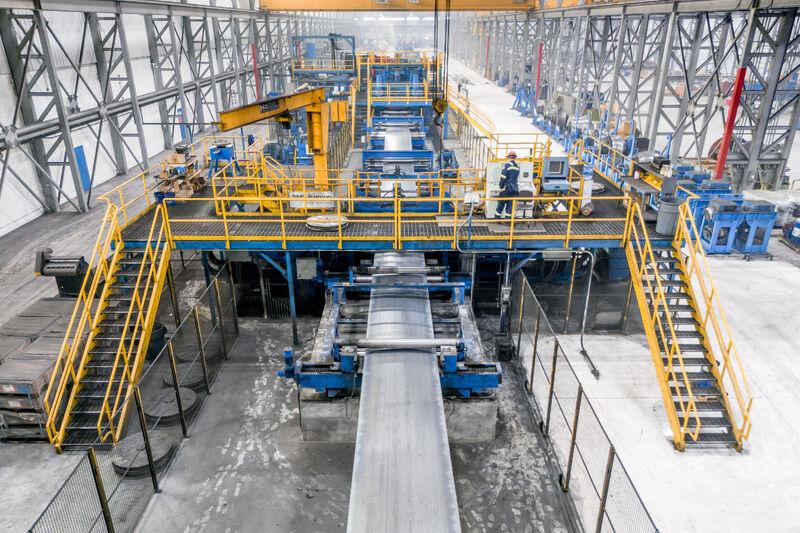
Welded steel tubes and hollow sections are often manufactured from steel strip supplied in large coils. The thickness and width of the strip are selected according to the dimensions and requirements of the finished product.
On the production line, the strip is gradually unwound and passes through a series of forming rolls. These progressively bend its edges upwards and inwards. Step by step, the originally flat strip takes on a circular shape until its edges come close together.
At this stage, the result is an almost closed round tube, ready for welding.
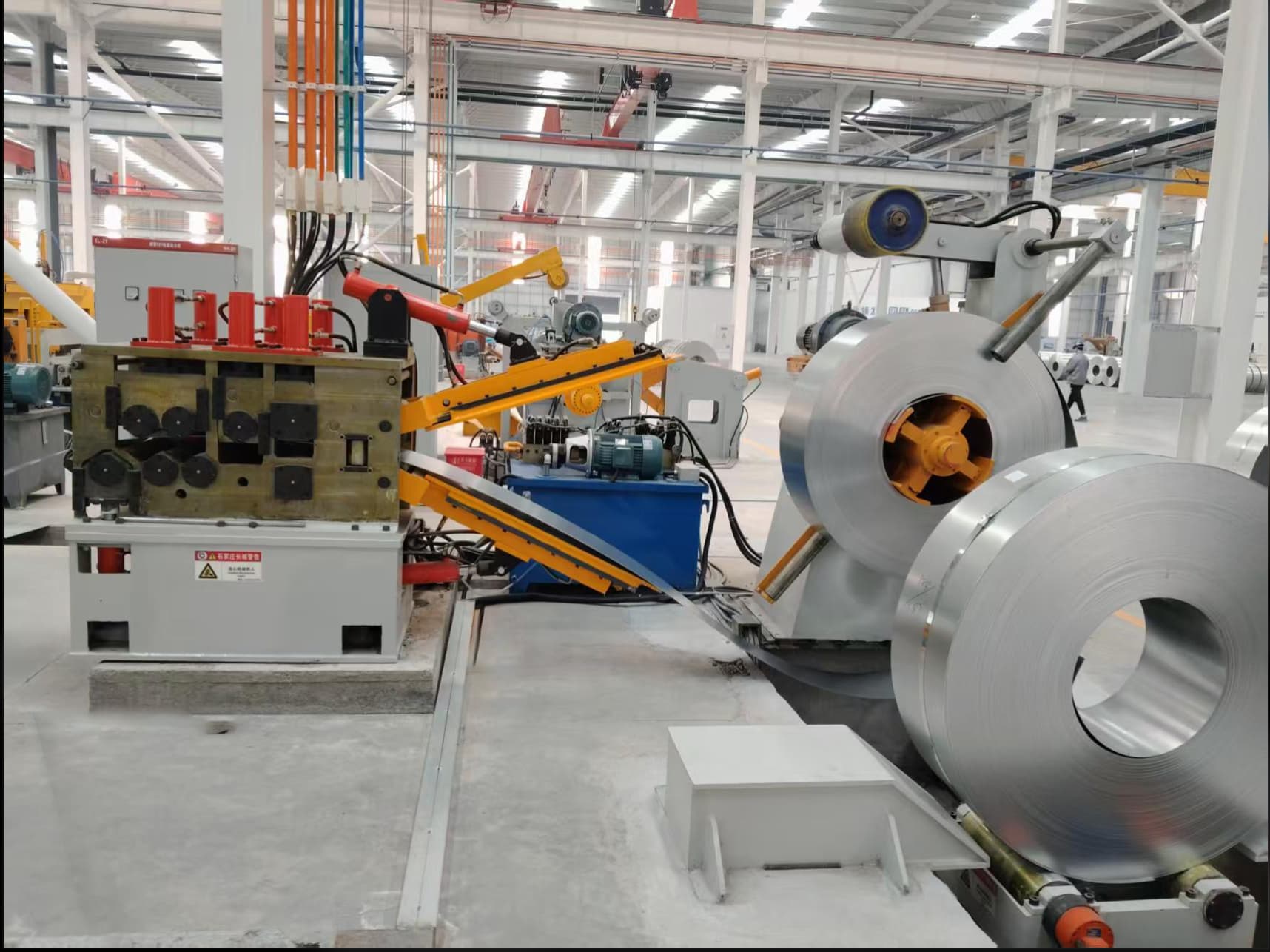
Steel strip is the starting material for the production of welded tubes and hollow sections.
How does a steel strip become a closed tube?
Once the edges of the formed strip have been brought close together, the next step is longitudinal welding.
High-frequency welding (HFW) is commonly used in the production of steel tubes. An electrical current heats the edges of the strip to the required temperature, after which squeeze rolls press them together. This creates a continuous longitudinal weld without the need for additional filler material.
After welding, excess weld material is removed as required, and the tube moves on to further processing.
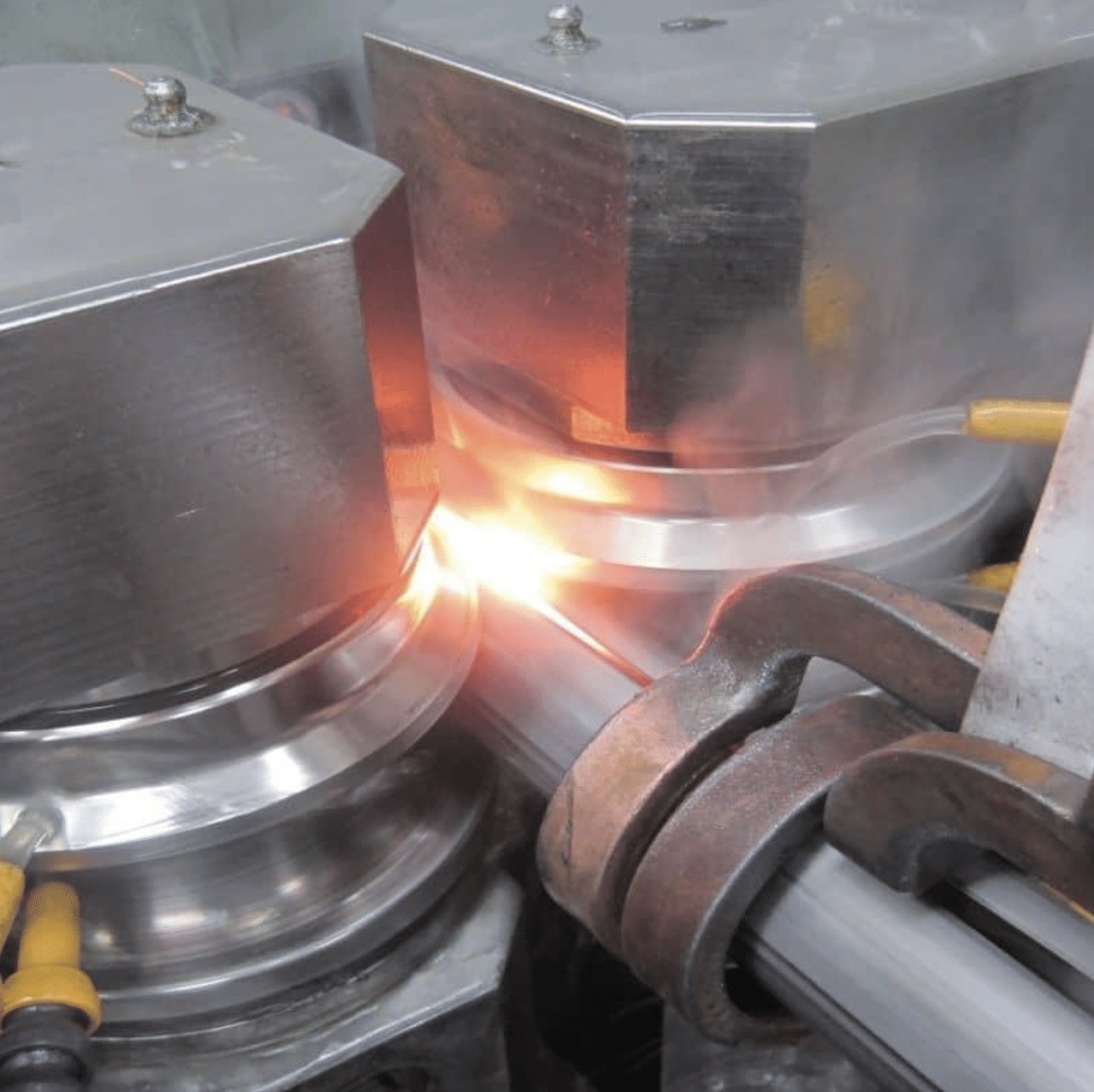
The longitudinal weld joins the edges of the formed steel strip to create a closed round tube.
How does a round tube become a square or rectangular hollow section?
If the required product is a round tube, it is sized to the specified dimensions and retains its circular shape. However, if a square or rectangular hollow section is needed, the already welded round tube passes through additional sets of forming rolls.
These progressively reshape the tube, creating flat sides and rounded corners. The result is a square hollow section (SHS) or rectangular hollow section (RHS).
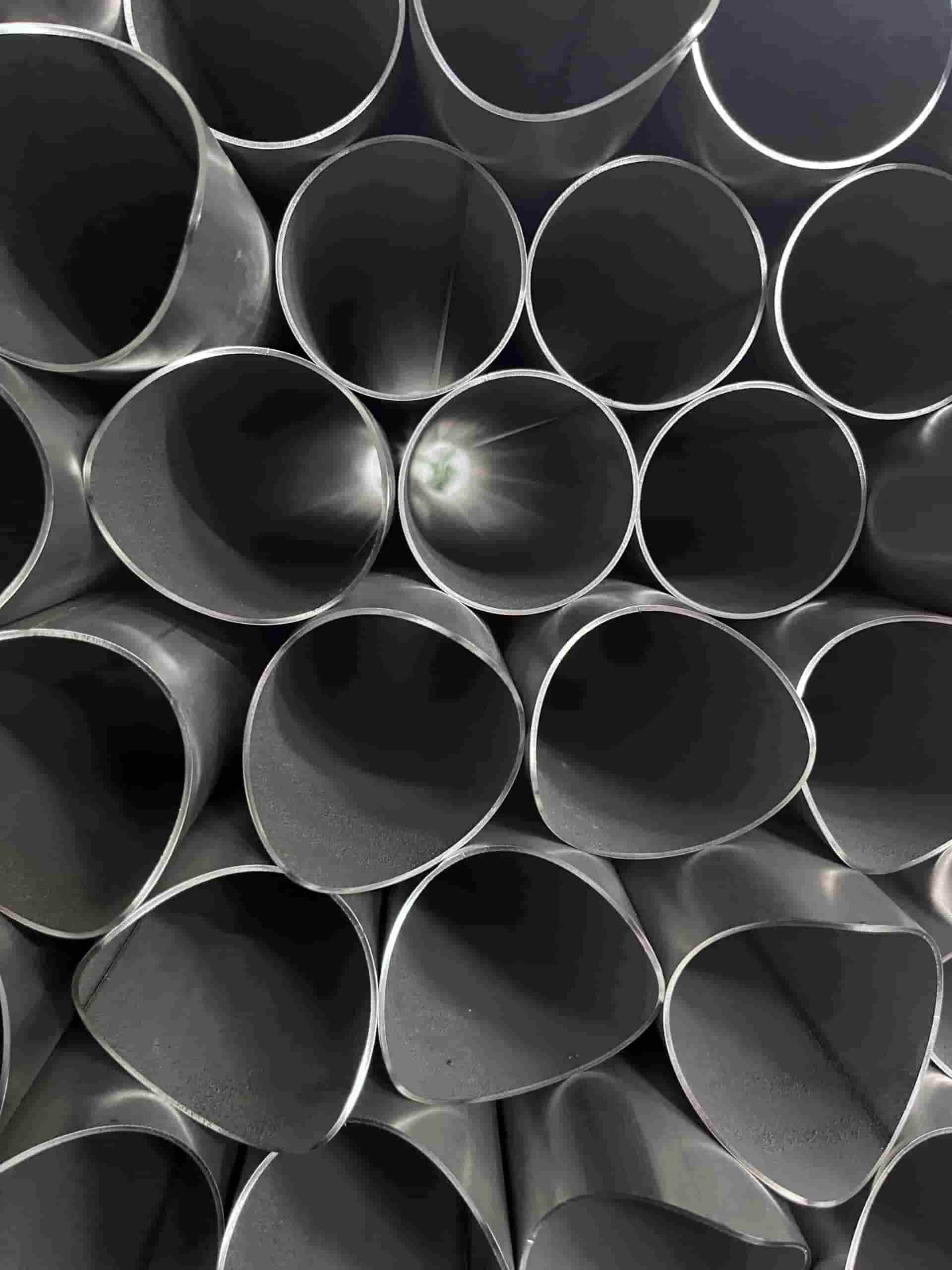
Round steel tube after forming and welding.
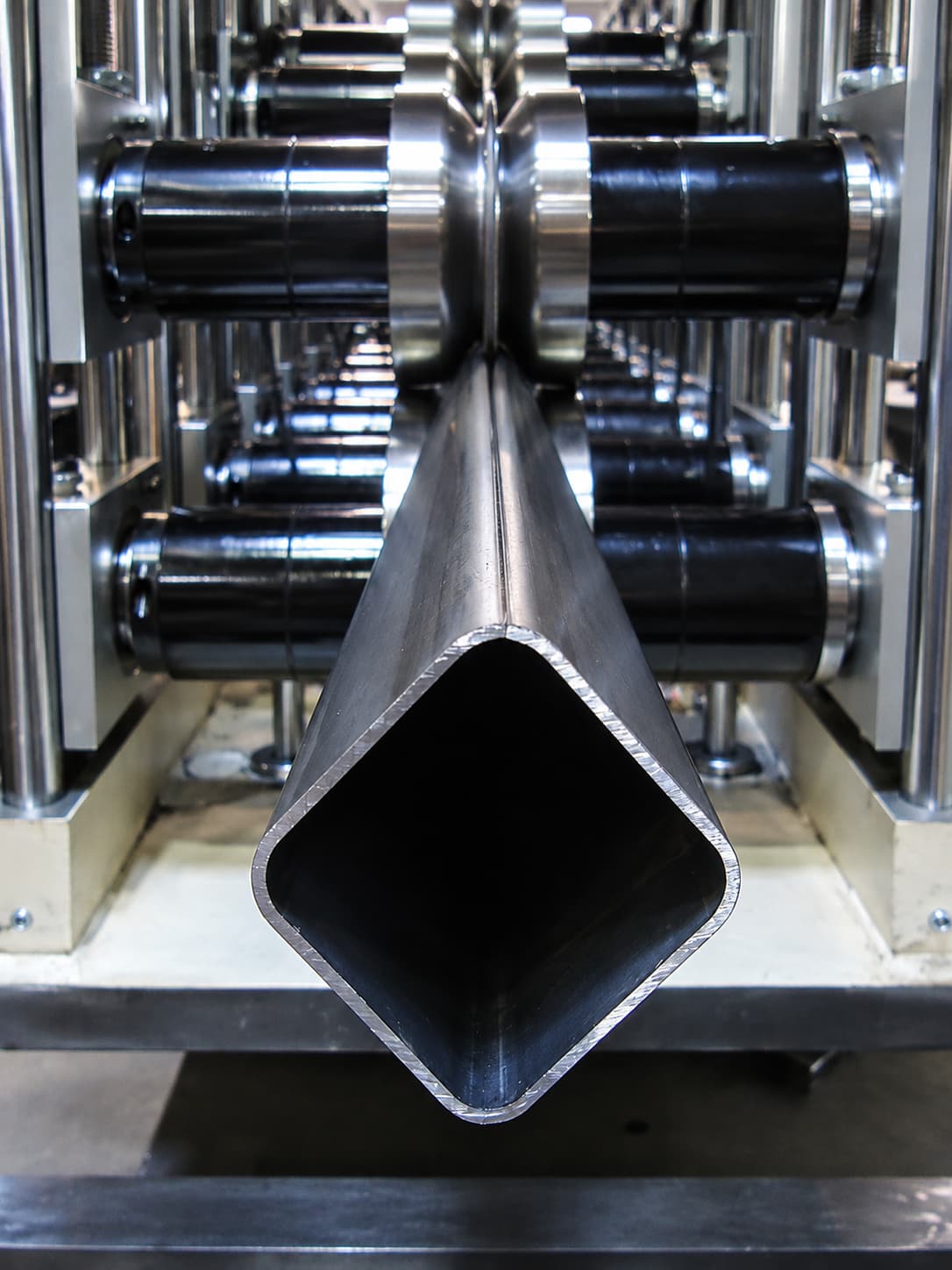
Progressive reshaping of the cross-section using forming rolls.
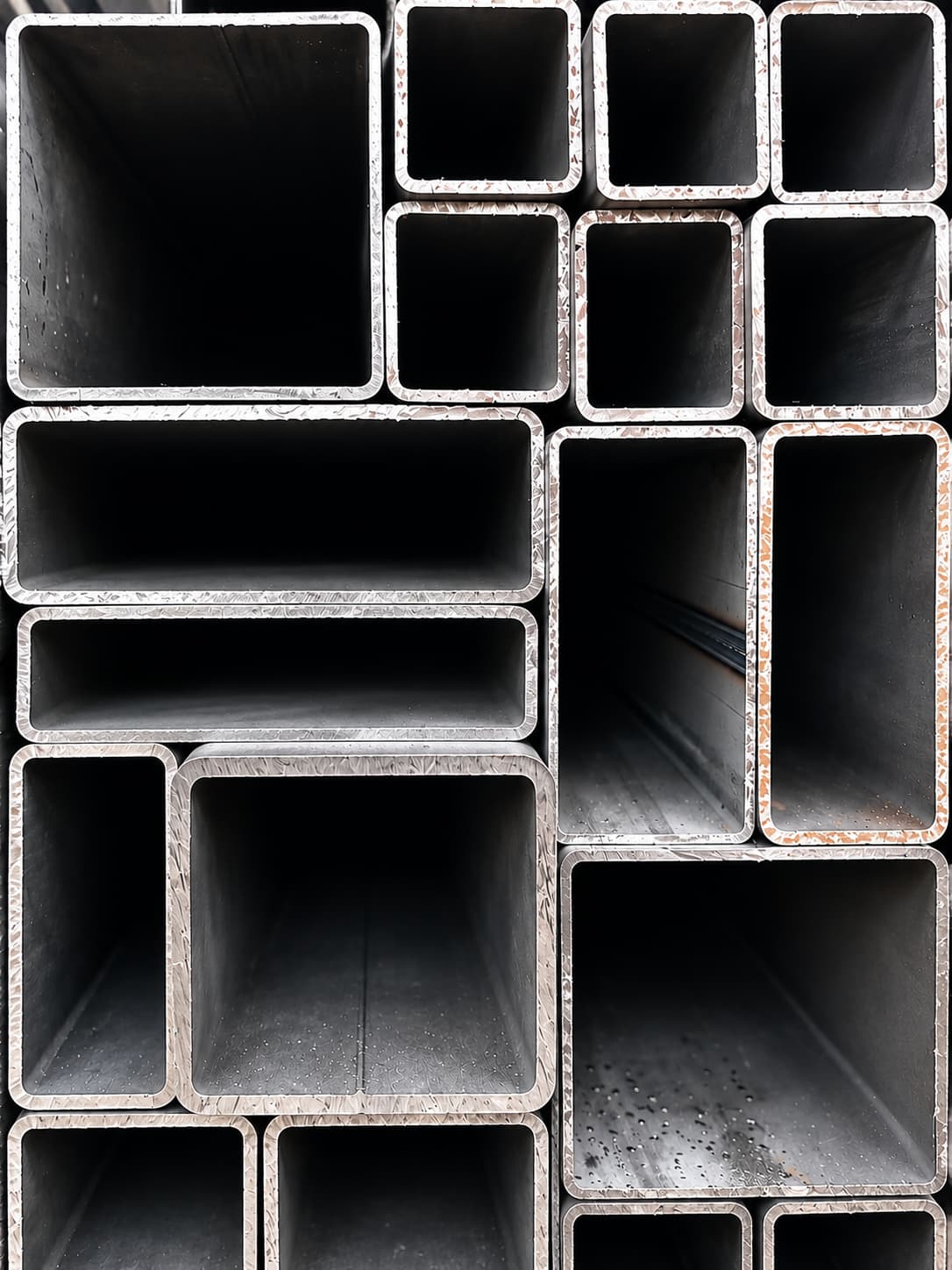
Finished hollow sections in various dimensions.
The same dimensions do not always mean the same properties
Two steel hollow sections may have identical external dimensions and wall thicknesses, yet differ in their properties or intended applications.
These differences can result from the steel grade, manufacturing process or subsequent treatment.
Structural hollow sections are commonly manufactured in accordance with two European standards:
Cold-formed hollow sections
The steel is formed at ambient temperature without subsequent heat treatment of the complete section. This standard covers cold-formed welded structural hollow sections.
Hot-finished hollow sections
This standard covers hollow sections formed at elevated temperatures, as well as sections initially formed cold and subsequently subjected to appropriate heat treatment.
Technical requirements and dimensions
Both standards are divided into two parts. Part 1 specifies the technical delivery conditions, while Part 2 covers dimensions, tolerances and sectional properties.
The manufacturing method can influence corner geometry, residual stresses and other properties that are important when designing steel structures.
For this reason, choosing a hollow section involves more than simply checking its dimensions. It is also important to understand how it was manufactured and which technical requirements it meets.
We will explore the differences between EN 10219 and EN 10210 in more detail in a separate article.
How is the quality of finished hollow sections checked?
Throughout production, dimensions, shape, weld quality and other characteristics are checked according to the requirements of the particular product.
Inspections may include measurements of external dimensions, wall thickness, straightness and cross-sectional geometry. Non-destructive testing methods, such as ultrasonic or electromagnetic testing, may also be used to assess weld quality.
The mechanical properties of the steel are verified through tests performed on test specimens. The results of the required inspections and tests may also be documented in an inspection certificate 3.1 according to EN 10204, where this type of document is required.
Finished sections are then cut to the required lengths, marked and prepared for storage or dispatch.
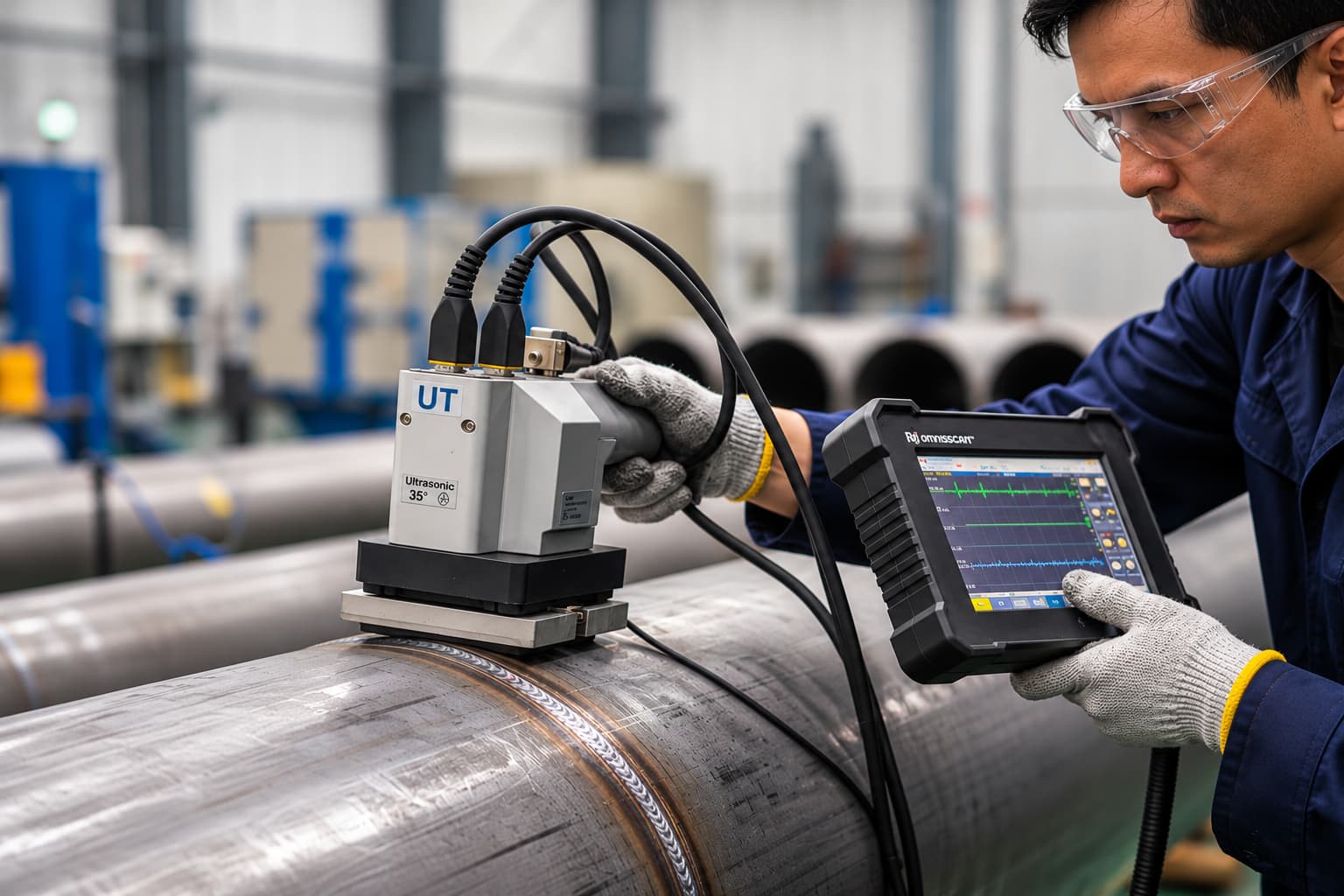
Checking the dimensions and properties of hollow sections is an integral part of the manufacturing process.
The journey does not end when the section is manufactured
Finished steel tubes and hollow sections may undergo additional treatments depending on where and how they will be used.
Their surfaces can be cleaned by shot blasting, temporarily protected with preservation oil, or treated through galvanising or protective coatings. Each process serves a specific purpose, from preparing the surface for further processing to protecting the steel against corrosion.
The next stage is fabrication. Tubes and hollow sections are cut, drilled, welded and joined to create finished structures.
Material cutting
Preparing tubes and hollow sections to the required lengths for further manufacturing or assembly.
Laser cutting
Producing precise holes, cut-outs and shaped joints directly in the material.
Further manufacturing operations
Welding, machining, surface treatment and assembly of finished structures.
Modern technologies, such as CNC laser tube and profile cutting, make it possible to create precise holes, cut-outs and shaped joints directly in the material. In many cases, this reduces the number of subsequent manufacturing operations required.
From steel strip to finished product
Manufacturing a steel tube or hollow section involves a series of technological operations, from preparing the steel strip through forming and welding to quality control and further processing.
The manufacturing process, together with the properties of the steel used, influences the final characteristics of the section and its potential applications.
That is why two steel hollow sections that look identical can have more differences than you might expect.
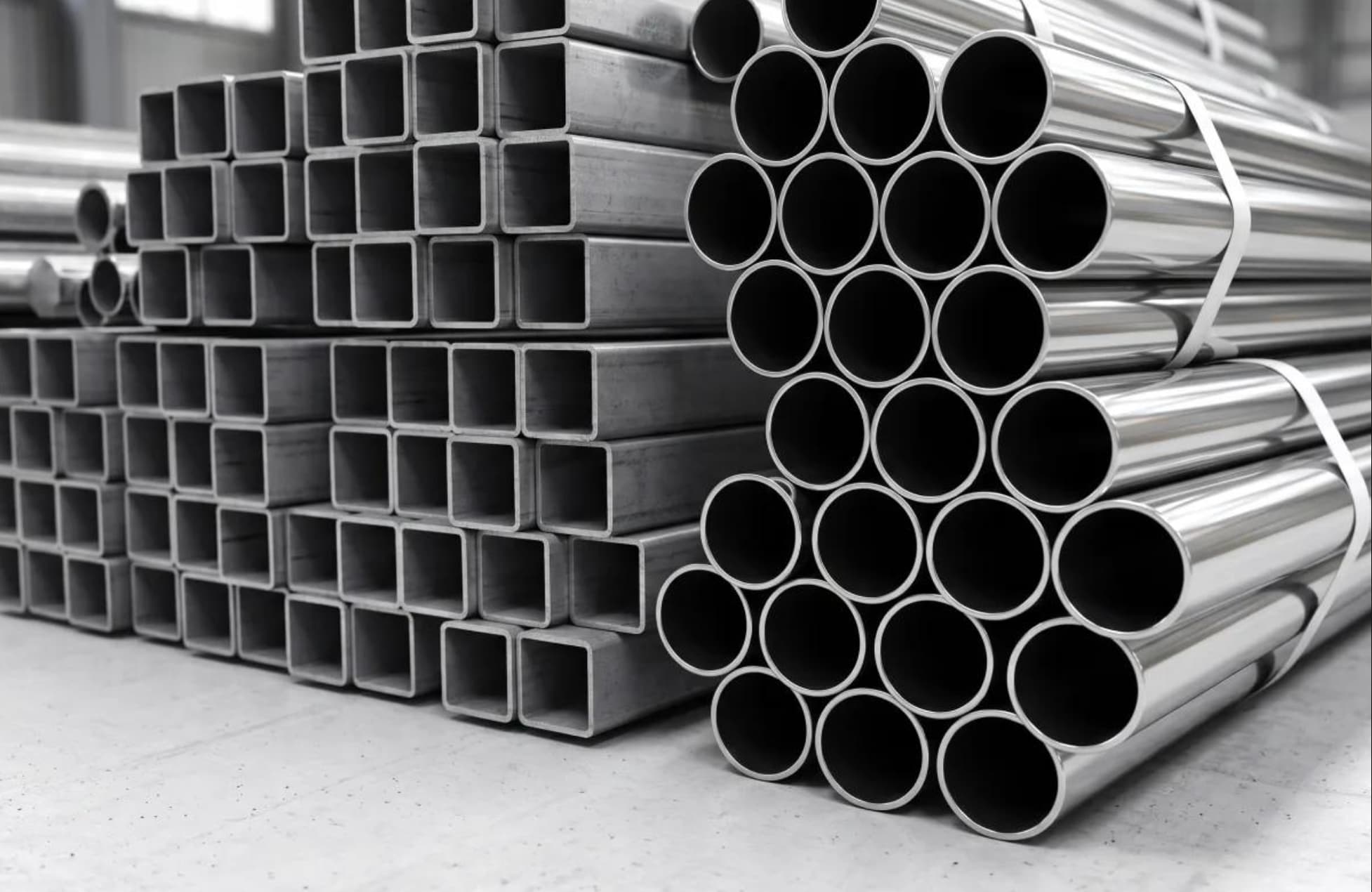
Finished steel tubes and hollow sections ready for further processing.
Need components manufactured from your drawings?
At HOSTINKOVO, we specialise in CNC laser cutting of tubes and profiles, laser engraving and metal fabrication. We also supply steel tubes, hollow sections and other metal stock to our customers.
On our blog, we explore materials, manufacturing processes and technologies used in industrial applications.
Discover our CNC laser tube and profile cutting.
